Context:
This project was completed in my UBC APSC 101 class, a project-based engineering course for first-year students. In this course, we learn about the engineering design process and apply them to various projects in groups of five.
Specifically for this project, we were tasked with using commonly found household items to create a claw that automatically picks up objects when detected. I am proud of our team for scoring higher than the class average.
The outputs for this project included testing how many objects the claw could successfully pick up within a time frame and a PowerPoint summarizing our entire work process.
Here’s what I learned:
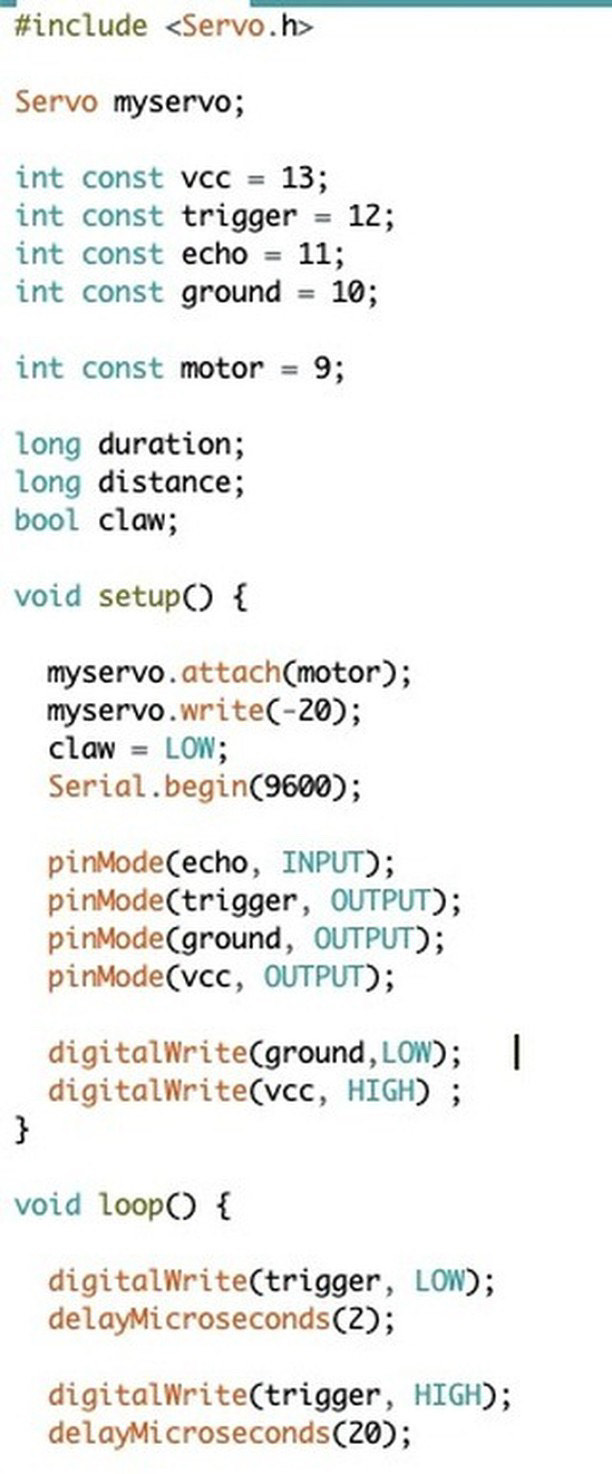
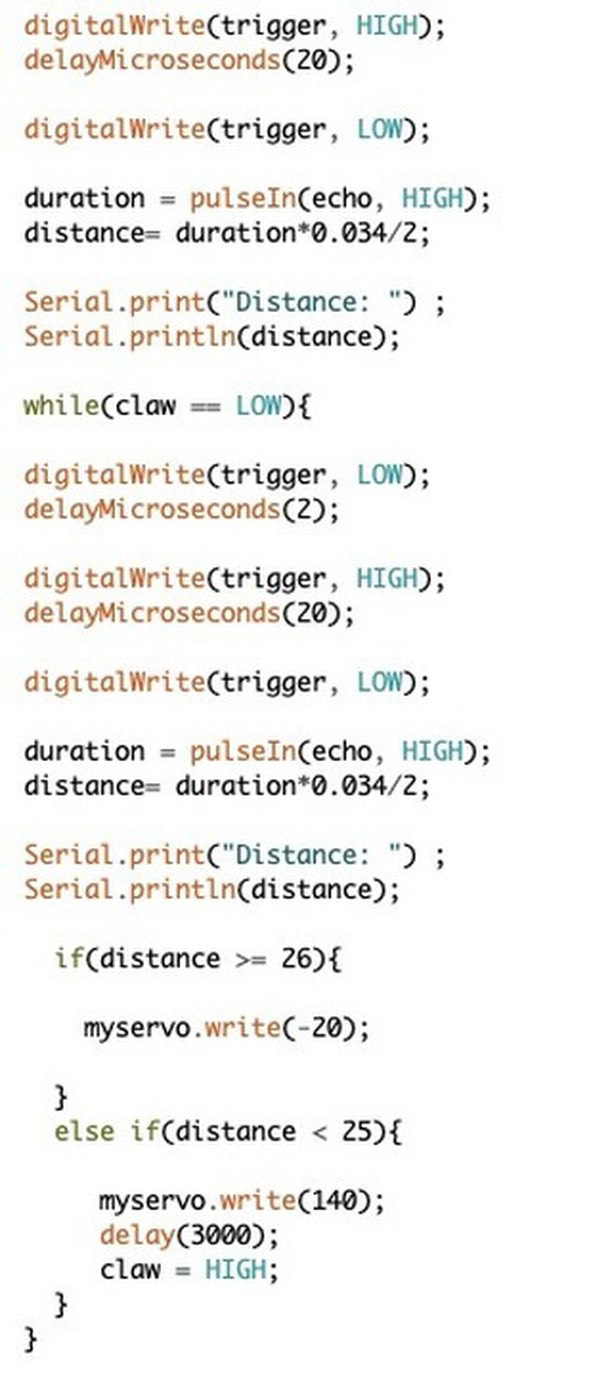
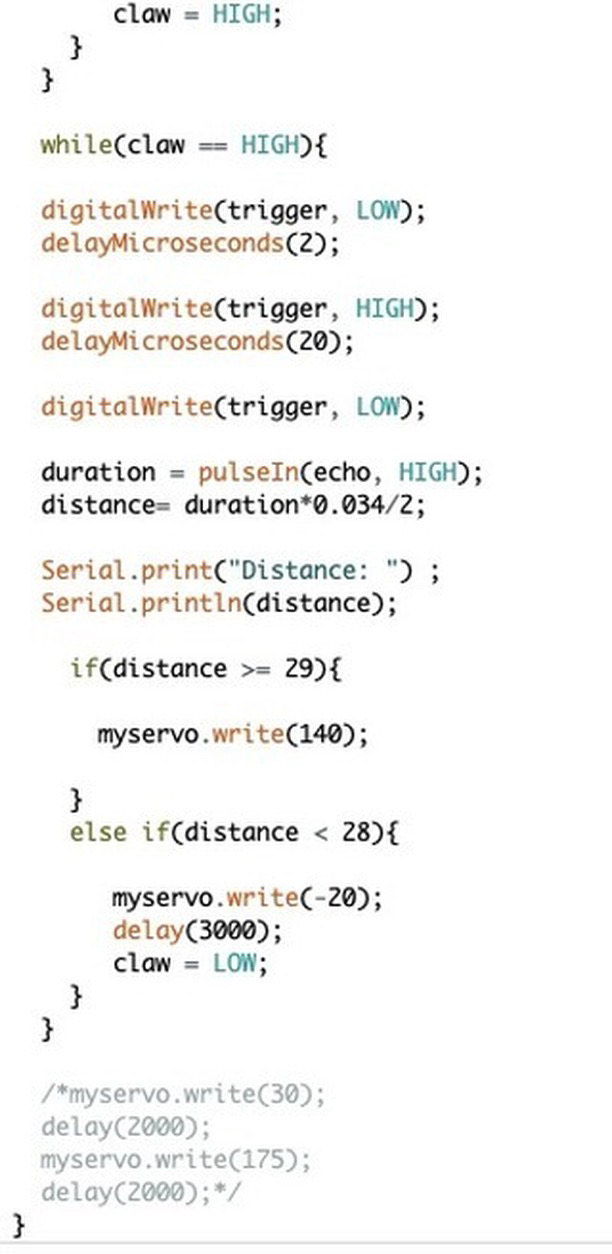
Arduino Code: We learned how to combine servo motors with distance sensors to create the basic mechanism for the mechanical claw. The code below allows the claw to close automatically when the distance sensor detects a certain distance from the ground.
Experiments: We learned how to use a systematic experimental method to find the optimal design solution, specifically how to mitigate risks.
Teamwork: In our class, we were automatically assigned to four other people. Initially, we had issues delegating work, as we did not know each other’s strengths and weaknesses. As time went on, we started understanding what we each excelled at and were able to finish the project on time. I found it very important for everyone to discuss boundaries, as we had other classes to balance. Staying strict to those rules actually made us more productive. In addition, I was in charge of creating the final presentation, and our team finished it fairly quickly. I assigned tasks through observations of each team member and their preferences.